Here’s something I’ve never understood. An organisation can spend years developing someone’s technical expertise. They’ll invest in qualifications, leadership programs, systems training, and specialist knowledge. That person becomes one of the most knowledgeable people in the business.
Then one day someone says, “You should present this.” And apparently that’s the training.
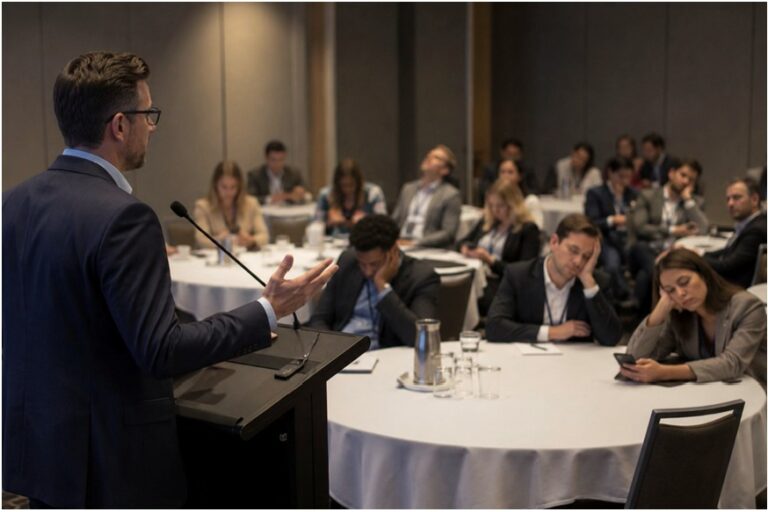
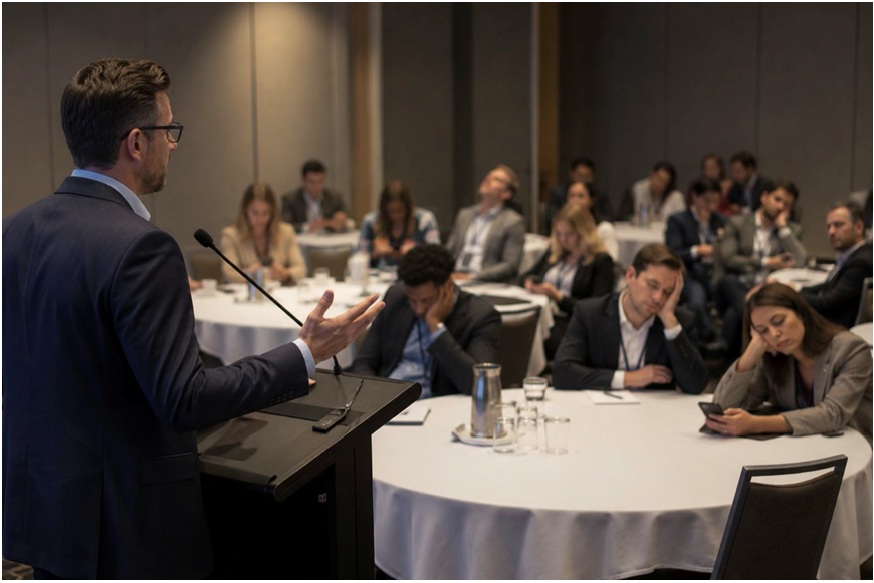
Suddenly your brilliant expert is standing in front of the executive team, an important client or 500 people at an industry conference with a 47-slide deck and absolutely no idea how to turn everything they know into something the audience can understand and remember.
It happens all the time and it can be an expensive mistake!
Expertise doesn’t automatically make you interesting
I’ve worked with extraordinarily intelligent people who are serious subject matter experts. That expertise is precisely what makes them valuable.
It can also make presenting difficult because when you’ve spent 15 years immersed in a subject, everything feels important. You know the history. You understand the nuances and exceptions. You know why slide 36 matters.
Your audience doesn’t. They’re sitting there trying to work out: What’s the point? Why does this matter to me? What am I supposed to do with this information?
Read More: How to Get an F&I Certificate: Your Path to a Rewarding Career in Automotive Finance
That gap between what the presenter knows and what the audience needs is where many presentations come unstuck.
And there’s a commercial cost
Think about where people present inside your organisation.
They pitch for business. They present recommendations to executives. They ask Boards for investment. They explain change to employees. Your technical experts may even represent the organisation at major conferences or speak directly to your most valuable clients.
These aren’t inconsequential conversations. Yet organisations often wait until somebody is visibly struggling before providing public speaking training.
I think we have that backwards. If someone’s role requires them to communicate important ideas to important people, why wouldn’t we teach them how to do it before the stakes are high?
What should corporate public speaking training actually change?
For me, good corporate public speaking training starts with the presentations people genuinely need to give.
If you’re pitching to a client next month, let’s work on that. If you have a Board presentation coming up, bring it. If your job involves explaining complicated information to people who don’t share your technical background, that’s exactly what you should be practising.
You need to know how to decide what your audience really needs, structure your thinking so they can follow it, and communicate in a way that gives your expertise the credibility it deserves.
And you need feedback. It’s very difficult to notice your own habits while you’re presenting. You’re busy presenting!
Don’t wait for the bad presentation
When people come to me for public speaking training in Sydney or Melbourne, sometimes there’s already been a difficult meeting, a pitch that didn’t land or feedback that somebody needs to improve their “executive presence”.
I’d love organisations to get there earlier.
Your smartest people have spent years building expertise that is enormously valuable to your business. Teaching them how to communicate that expertise shouldn’t be remedial training after something goes wrong.
Read More: The benefits of online training
It should be part of developing them in the first place because the person representing your organisation in that important room doesn’t just need to know their stuff. They need to make sure everybody else understands why it matters.
About Michelle Bowden
Michelle Bowden CSP is an internationally recognised presentation and persuasion expert, award-winning educator and bestselling author of How to Present and How to Persuade. For more than 25 years, she has helped leaders, executives and professionals become more confident, compelling, and persuasive communicators through her keynote speaking, corporate programs, and Persuasive Presentation Skills Masterclasses.
About the Author